


Varicose veins are an extremely common disease.It affects the veins, increasing their diameter, thinning the walls and impairing the functioning of the valves.Varicose veins can occur on any part of the body, but the veins in the lower extremities are most commonly affected.Almost half of women and around 25% of men suffer from it.Why are leg veins so commonly affected by this disease?
Main reasons
The causes of varicose veins on the legs are not yet fully understood, but the most common are the following:
- Physical inactivity.Due to a lack of mobility, blood flow becomes slower and worse.This also explains the fact that the disease is becoming younger and younger - while people used to suffer from it after 30 years, today they suffer from it after 20 years.People of the “computer” generation spend a lot of time sitting motionless.
- Inheritance.Studies have shown that varicose veins are more common in people whose relatives also suffered from them.Genes inherit, among other things, the structure of the veins and thus a predisposition to the appearance of varicose veins.
- Obesity.Excess weight puts too much strain on the legs and the blood in the veins often stagnates.
- Great strain on the legs.It usually occurs in people who spend a lot of time on their feet due to their job (salespeople, teachers, hairdressers).
- Uncomfortable shoes and clothing.The most common cause of varicose veins on the legs is high heels.Because girls are forced to balance on a small area of their feet, it puts enormous strain on their legs.Likewise, skinny jeans make you look more attractive, but they tighten the pelvis and disrupt blood circulation.
- Smoking and alcohol.Bad habits cause significant damage to our health and significantly affect the circulatory system.
- Diseases of the pelvic organs.Diseases of the intestines and genital organs lead to incorrect blood circulation and stagnation, which also affects the legs.
- Pregnancy.Since pregnancy places enormous strain on a woman's body, it can lead to the development of varicose veins.Hormonal changes lead to a reduction in vein tone, and an enlarged uterus often puts pressure on the veins.In addition, the weight increases significantly.
Symptoms of varicose veins in the legs
- feeling of heaviness in the legs;
- swelling in the leg that occurs at night and disappears in the morning;
- burning vein;
- The vein swells and becomes more visible.
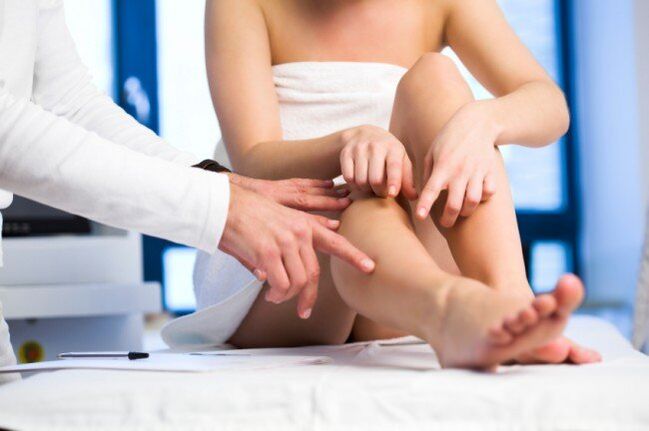
If you experience these symptoms and have reasons for varicose veins on your legs, you should immediately contact a phlebologist.After the examination, he may prescribe an examination to confidently determine the malfunction of the veins.To do this, follow the steps below:
- Doppler ultrasound (shows how blood flows in the veins and whether there are any obstacles to its normal functioning)
- Fluoroscopy (with its help, veins are illuminated with a special light, which allows you to accurately determine their condition)
Treatment of varicose veins on the legs
At the initial stage, it is enough to use special ointments and gels that relieve pain and heaviness in the legs; wearing compression stockings or tights is also required.
Patients are prescribed taking venotonics, which improve blood circulation and tighten the venous walls.They complement the effects of more serious medications.
In advanced cases, sclerotherapy, ozone therapy, phlebectomy or endovascular laser coagulation are used.All of these procedures help normalize blood circulation in the legs.
Varicose veins: causes, symptoms and treatment form a whole branch of medicine that is evolving every day.Perhaps in the future there will be ways to treat affected veins without removing them and without serious interventions, but for now we advise you to take care of yourself and avoid the listed causes of varicose veins in the legs from an early age.